 English
 Español
  Português
  русский
  Français
  日本語
日本語  Deutsch
  tiếng Việt
  Italiano
  Nederlands
  ภาษาไทย
  Polski
  한국어
한국어  Svenska
  magyar
  Malay
Malay  বাংলা ভাষার
  Dansk
Dansk  Suomi
Suomi  हिन्दी
  Pilipino
  Türkçe
  Gaeilge
  العربية
  Indonesia
  Norsk
Norsk  تمل
تمل  český
český  ελληνικά
  український
  Javanese
  فارسی
فارسی  தமிழ்
தமிழ்  తెలుగు
  नेपाली
  Burmese
  български
  ລາວ
ລາວ  Latine
  Қазақша
  Euskal
  Azərbaycan
  Slovenský jazyk
  Македонски
  Lietuvos
  Eesti Keel
  Română
  Slovenski
  मराठी
मराठी  Srpski језик


Automotive Plastic Parts Mold Requirements: A Complete Guide For 2026
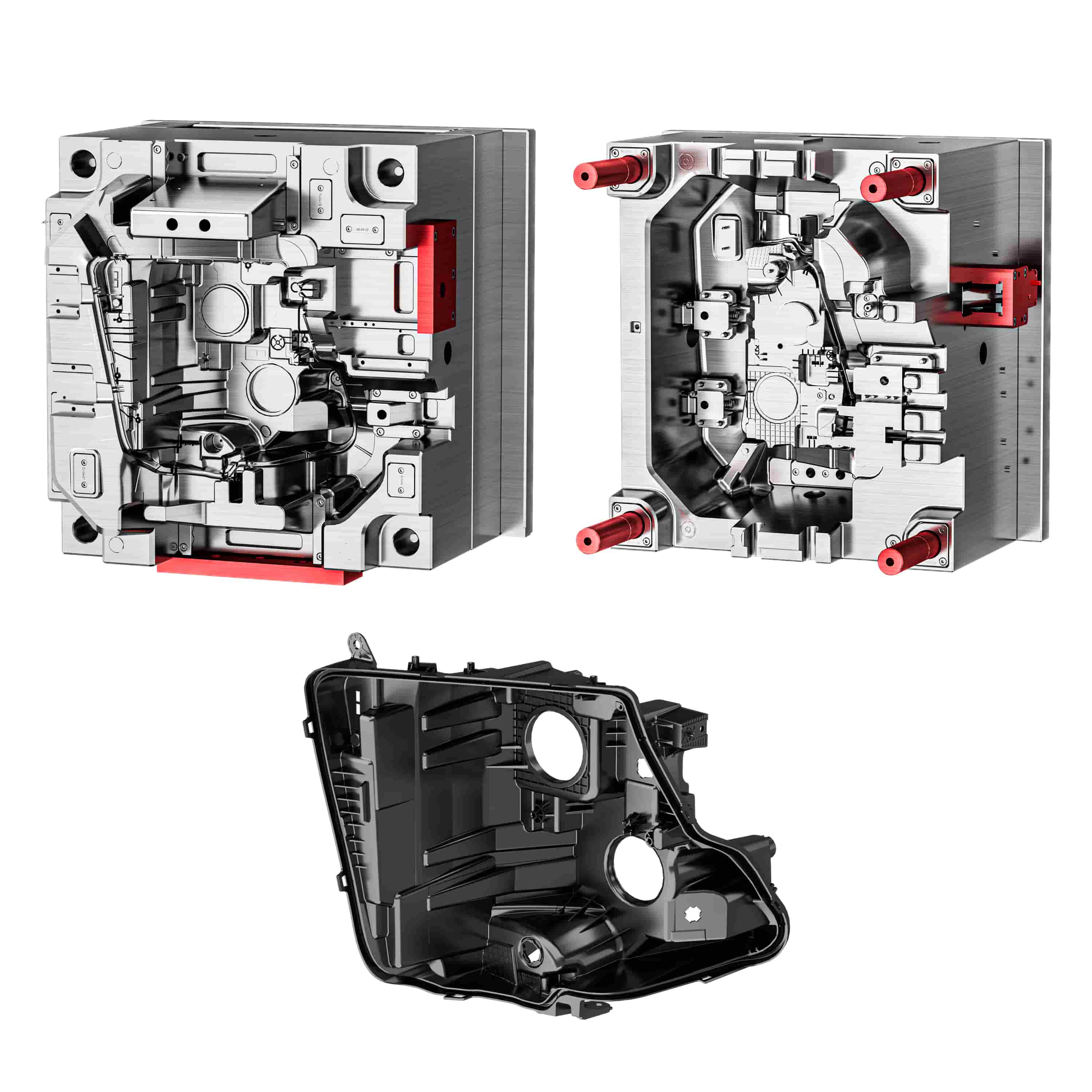
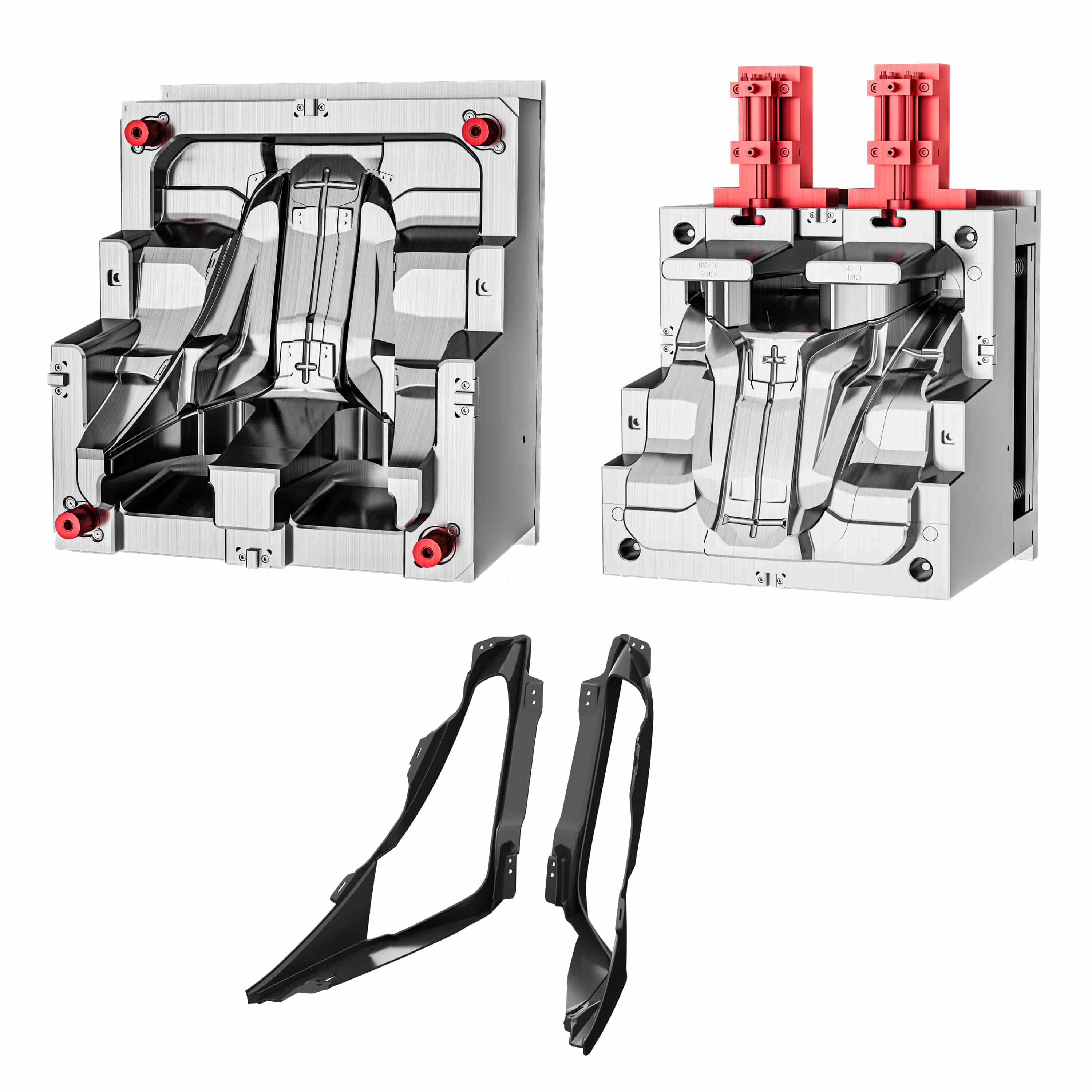
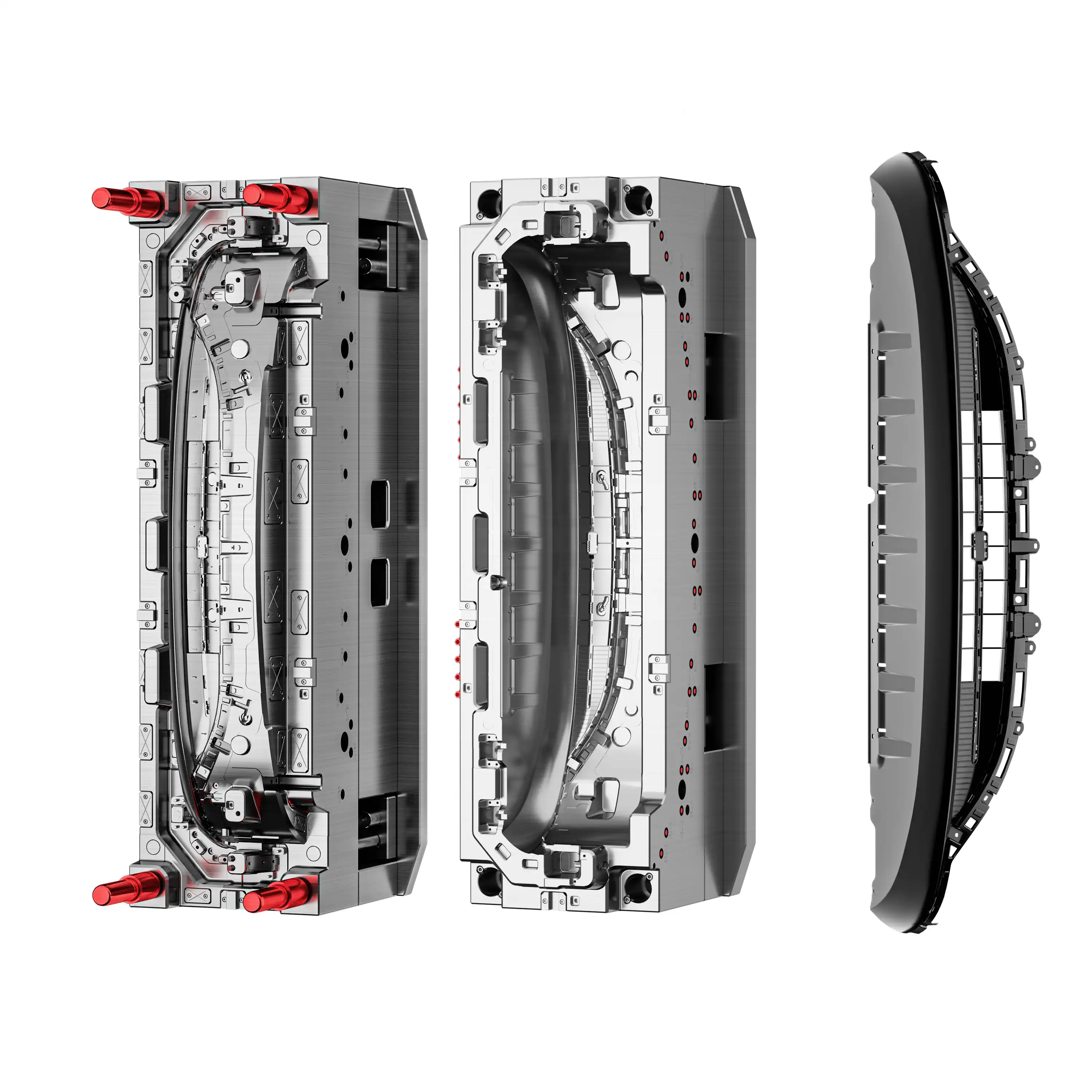
The automotive industry demands the highest standards for every component, and plastic part injection molds are no exception. Whether you are designing interior trim, exterior bumpers, under-hood components, or functional automotive parts, understanding the critical mold requirements is essential to meet industry regulations, ensure part performance, and achieve long-term production efficiency.
In this guide, we break down the non-negotiable requirements for automotive plastic parts molds, covering tolerance, material selection, durability, and compliance standards that every automotive mold must meet.
1. Strict Dimensional Tolerance & Precision Control
Automotive plastic parts require extremely tight dimensional accuracy to ensure perfect fit with other components, eliminate assembly issues, and meet vehicle performance standards.
Tolerance Standard: Most automotive parts require a tolerance range of ±0.01mm to ±0.05mm, far stricter than general consumer plastic parts.
Mold Design Requirements: The mold must be designed with precision cooling systems, high-precision guiding mechanisms, and rigid mold bases to prevent deformation during high-volume production.
Key Application: This is critical for parts like door panels, instrument clusters, and electronic housings, where even minor dimensional errors can cause assembly failures.
2. High Structural Strength & Impact Resistance
Automotive plastic parts must withstand extreme operating conditions, including vibration, impact, and temperature fluctuations. The mold must be engineered to produce parts that meet these performance demands.
Vibration & Impact Testing: All automotive plastic parts must pass industry-standard vibration and impact tests, ensuring they do not crack or deform under real-world driving conditions.
Mold Design Optimization: The mold must support proper wall thickness distribution, reinforced rib structures, and optimized gate placement to eliminate weak points in the final part.
Material Compatibility: The mold must be compatible with high-strength engineering plastics like ABS, PC, PA66+GF, and PP+GF, which are standard for automotive applications.
3. High Temperature Resistance & Thermal Stability
Many automotive plastic parts operate in high-temperature environments, especially under the hood or near engine components. The mold must be designed to produce parts that maintain their performance under extreme heat.
Temperature Range: Automotive parts must typically withstand continuous temperatures from -40°C to 120°C, with some under-hood parts requiring resistance up to 150°C.
Mold Steel Selection: High-quality mold steels like H13, 718H, and S136 are required to withstand high injection temperatures and prevent thermal deformation of the mold itself.
Cooling System Design: The mold must feature an optimized, uniform cooling system to ensure consistent part cooling, reducing warpage and ensuring thermal stability of the final product.
4. Ultra-Long Mold Lifespan For High-Volume Production
Automotive production runs are extremely high-volume, often requiring millions of parts over the lifecycle of a vehicle model. The mold must be built to last.
Lifespan Requirement: Automotive plastic parts molds must have a guaranteed lifespan of 1,000,000 shots or more, with many high-volume production molds designed for 2,000,000+ shots.
Wear Resistance: The mold core and cavity must be heat-treated and polished to resist wear from high-volume production, reducing maintenance costs and ensuring consistent part quality over time.
Modular Design: Many automotive molds feature modular inserts, allowing for quick replacement of worn components without full mold replacement, minimizing production downtime.
5. Compliance With Global Automotive Industry Standards
Automotive plastic parts molds must meet strict global industry standards to ensure the final parts comply with safety, environmental, and quality regulations.
Key Standards: The mold must support production of parts that meet IATF 16949 quality management standards, RoHS environmental regulations, and OEM-specific automotive requirements.
Traceability: All automotive molds must include full traceability documentation, including material certificates, test reports, and inspection records, as required by automotive OEMs.
Safety Design: The mold must be designed to eliminate sharp edges, flash, and other defects that could compromise part safety, especially for interior and passenger-contact parts.
Final Thoughts
Automotive plastic parts molds are far more than just standard injection tools — they are precision-engineered systems that must meet the most demanding standards in the manufacturing industry. By prioritizing tight tolerance, high strength, thermal stability, long lifespan, and industry compliance, you can ensure your automotive plastic parts perform reliably, meet regulatory requirements, and support high-volume production for years to come.
If you are looking for a reliable partner for your automotive plastic parts mold project, our team of experienced automotive mold engineers is ready to help. contact us today at renhangying@hmmouldplast.com or WhatsApp: +86 18966109175 to get a custom quote for your next automotive mold project.

Send Inquiry




X
We use cookies to offer you a better browsing experience, analyze site traffic and personalize content. By using this site, you agree to our use of cookies.
Privacy Policy