 English
 Español
  Português
  русский
  Français
  日本語
日本語  Deutsch
  tiếng Việt
  Italiano
  Nederlands
  ภาษาไทย
  Polski
  한국어
한국어  Svenska
  magyar
  Malay
Malay  বাংলা ভাষার
  Dansk
Dansk  Suomi
Suomi  हिन्दी
  Pilipino
  Türkçe
  Gaeilge
  العربية
  Indonesia
  Norsk
Norsk  تمل
تمل  český
český  ελληνικά
  український
  Javanese
  فارسی
فارسی  தமிழ்
தமிழ்  తెలుగు
  नेपाली
  Burmese
  български
  ລາວ
ລາວ  Latine
  Қазақша
  Euskal
  Azərbaycan
  Slovenský jazyk
  Македонски
  Lietuvos
  Eesti Keel
  Română
  Slovenski
  मराठी
मराठी  Srpski језик


THE IMPORTANCE OF COOLING TIME IN PLASTIC PALLET MOLDING
THE IMPORTANCE OF COOLING TIME IN PLASTIC PALLET MOLDING
What Factors are Involved in the Cooling Process?
Before discussing the importance of cooling time, let’s take a look at what the process entails. An incredibly high temperature is required to melt plastic resin for injection, and due to this immense heat, the cooling process can take up to four-fifths of the cycle time, if not longer. The following elements of plastic injection molding are the temperature changing stages that lead up to the final product:
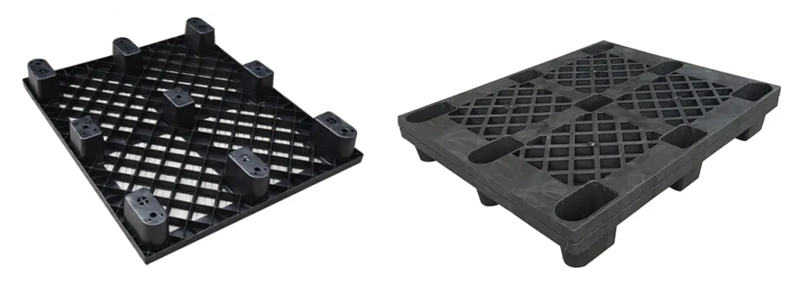
Resin Heating and Injection: The base resin is liquified by being subjected to high temperatures, and once melted to the appropriate viscosity, it’s injected into the mold.
Mold Packing and Holding: As the injection continues, some of the plastic begins to cool and shrink. To ensure the cavity is filled, additional material is injected and “held” to prevent backflow.
Cooling Stage: The cooling process begins after packing and holding the material in the mold. During this stage, the plastic solidifies, taking on the permanent shape of the mold.
After this process, the part is ejected from the mold and inspected for quality assurance purposes. If cooling time is improperly calculated, it can result in defects.
Why is Cooling Time Important?
When cooling is improperly executed, the plastic part won’t sufficiently harden, leading to damage from the firing ejector pins. Even a mold’s design can influence the cooling process, resulting in increased shrinking, sinking, discoloration, warping, and delamination. If cooling channels are implemented into the mold’s design, it can aid in the dispersal of heat and lower the cavity wall’s temperature, which in turn leads to even cooling. However, excessive cooling can also result in an unnecessarily extensive cycle time, which is why it’s crucial molding manufacturers are capable of accurately estimating cooling time.
How is Cooling Time Calculated in Plastic Injection Molding?
Cooling time can be calculated by using an equation that incorporates wall thickness and a measurement known as thermal diffusivity – which quantifies the plastic’s thermal conductivity, density, and energy requirements to raise its temperature. The estimated time also depends on the type of thermoplastic, as each has different melting and molding temperatures. This is a complicated equation, but if you’re working with an experienced injection molding partner, they will be well-versed in this process.
Despite taking up the majority of the cycle time, cooling time in plastic injection molding should not be rushed. It takes a combination of patience, mold design, and accurate mathematics to generate a cooling time that will result in maximized manufacturing speed. Midstate Mold is an expert turnkey manufacturer that excels at creating prototypes and executing production, resulting in efficient lead times. If you would like to discuss our process and how we calculate every stage of our injection molding, contact us today.
Hongmei Company are focus on injection mold for 20 years, if you are interested in, contact me.

Send Inquiry




X
We use cookies to offer you a better browsing experience, analyze site traffic and personalize content. By using this site, you agree to our use of cookies.
Privacy Policy